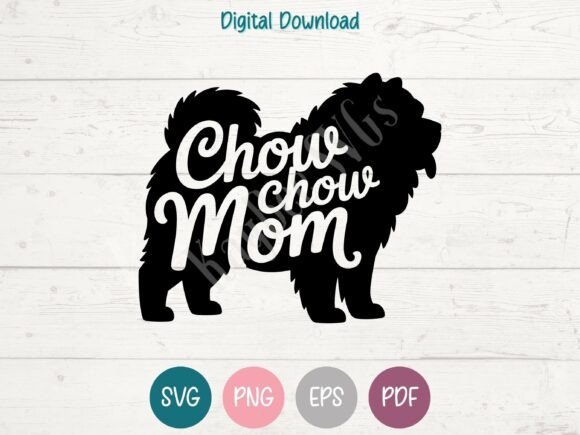
Chow Chow Dog Mom SVG PNG EPS PDF
When I pulled up KayBee SVGs’ Chow Chow Dog Mom design for the first time, I wasn’t looking for just another dog breed graphic. I had a stack of natural canvas totes sitting on my worktable, a new order for a pet-mom gift bundle, and a strong suspicion that the right linework could turn a simple accessory into something a customer won’t stop carrying around. What I needed was a file set that would translate beautifully from screen to stitch, without losing that soft, proud-chow personality. Immediately, the shape language stood out: rounded, balanced, and friendly without being cartoonish. The fluffy silhouette, the slightly tilted head, the gentle curve around the muzzle—it all reads like a chow who knows it’s adored. That unspoken confidence is exactly what dog-mom designs need to feel premium, not mass-produced.
In my testing, I loaded the file into my embroidery software to run a few stitch simulations on cotton canvas, a french terry sweatshirt panel, and a twill cap front. The composition works as a standalone focal point, and I could already picture it on a slate gray crewneck or a blush pink kitchen towel. The text “Chow Chow Mom” sits neatly beneath the illustration, with enough breathing room that it won’t crowd a hoop or force you into microscopic lettering. If you’ve ever had a satin-stitch serif break apart on a stretchy knit, you’ll appreciate how the typography here relies on clean, medium-weight lines that hold their own without demanding ultra-dense underlay. That choice alone told me the illustrator actually stitches her own designs, or at least listens to stitchers.
I immediately thought about a client who runs a small dog-boutique booth at local markets—her customers are deeply specific about breed representation. They don’t want a generic fluffy dog; they want a chow. The way the mane is suggested with a few deliberate curves, the width of the face, the compact ear placement—it’s recognizable even in a single-color stitch version. I flipped the design to a black-and-white mockup just to check if the personality survived without shading, and it did. That’s a huge plus for embroiderers who work with single-needle machines or prefer a classic, tonal thread look on linen tea towels or baby blankets.
The mood this design creates before you even stitch it
Opening the Chow Chow Dog Mom SVG PNG EPS PDF file bundle felt like walking into a well-organized craft room. The folders were clearly labeled, the vector lines crisp at any zoom level, and the layering was simple enough that I didn’t have to spend twenty minutes ungrouping and regrouping elements before digitizing. For me, that kind of tidiness matters because it cuts down prep time when I need to test three different size variations for a baby onesie, a standard tote, and a wide adult sweatshirt. The EPS version imports cleanly into digitizing software without jagged edges or stray nodes, and the PNG is high-res enough to use for mockup previews in a shop listing—something Etsy sellers will value right away.
The design’s mood is warm, sincere, and just a touch playful. It doesn’t scream “funny t-shirt quote” and it doesn’t go too sentimental; it sits comfortably in the middle ground where a handmade product feels personal but still professional. I’d feel confident handing a finished embroidered pillow cover to a customer at a pet expo or shipping it as a holiday gift without worrying it looks like a hobby project.
When an embroidered tote bag became the real test
I chose to stitch out the design on a medium-weight canvas tote bag—the kind that gets tossed into a car, carried to farmers’ markets, and washed a few times a season. That was my real-case test because tote bags are where embroidered graphics either become a beloved everyday accessory or a fuzzy, distorted mess after three washes.
I hooped a cutaway stabilizer, selected a 40-weight polyester thread in a warm charcoal for the main silhouette, and used a soft cream thread for the text. The chow’s head stitched first, and I watched carefully as the fill pattern settled into the fabric without puckering. The stitch density felt generous without turning the area into armor—crucial for a tote that needs to fold and flex. The lettering, set in a medium satin stitch, required only minor tension tweaks on my machine to avoid any gaps on the rounded canvas weave.
The final result surprised me: the design looked even more refined once stitched than it did in the digital preview. The stitched texture gave the chow’s mane a slightly brushed effect, almost like real fur. I attached a small leather tag next to it and imagined an Etsy seller photographing that bag in natural light for a product listing—the kind of image that stops a scroll. This is the design’s hidden strength: it elevates simple substrates into boutique-level products without needing extra bells and whistles.
Where this design earns its place in a craft business
If you’re running a small handmade shop, this file suits a surprisingly wide range of finished goods. I immediately earmarked it for:
- Unisex sweatshirts—the balanced visual weight doesn’t skew too feminine or masculine, so it fits a broad dog-parent audience.
- Kitchen towels and aprons—the single-color adaptability makes it a natural fit for flour-sack towels at holiday pop-up shops.
- Embroidered patches—with a tight satin border applied, this design would make an excellent iron-on or sew-on patch for jean jackets or backpacks.
- Baby and kids’ apparel—the soft, rounded shapes read as gentle and safe for nursery items, especially in pastel thread colors.
Because the Chow Chow Dog Mom SVG PNG EPS PDF bundle comes in multiple formats, I could easily drag the vector into a mockup template to offer custom color previews to clients without stitching a single sample. That’s a business advantage: pre-selling custom apparel with an accurate visual builds trust and reduces wasted inventory. I’ve learned that buyers who see a realistic embroidery mockup are far more likely to purchase a personalized gift than those who guess at the final look.
Used as a T-Shirt Designs asset, the graphic would print well, too, but for embroidery it truly shines because the linework is considered: no ultra-thin hairlines that drop out during digitizing, no awkward overlaps that cause unnecessary trims or jumps. That makes it a reliable Graphics option for apparel decorators who want to offer both screen-printed and embroidered versions from the same base design.
Fabrics and projects that demand extra care
Every design has its comfort zone, and this one deserves mindful placement when conditions get tricky. I wouldn’t hesitate to use it on a structured cap front provided I tested the curve first—domed surfaces can distort the rounded face if the design isn’t adjusted slightly. Similarly, on lightweight jerseys or slinky rayon, I’d add a heavy fusible stabilizer and possibly reduce the stitch density a touch to avoid tunneling. The text, while sturdy, still benefits from a minimum letter height of about half an inch; going much smaller risks the “Chow Chow Mom” becoming illegible on highly textured weaves like waffle knit or terry cloth.
For dark fabrics, especially black hoodies or deep navy burp cloths, thread color contrast needs testing. I’d run a quick swatch to see if a dusty rose or sage green still pops against the background. The design itself doesn’t include a background fill, which is excellent for keeping the hand of the fabric soft, but it does mean you’re relying entirely on thread contrast for visibility. Also, products that go through frequent hot washes, like crib sheets or dog bandanas, would benefit from pre-washed fabric and colorfast threads; I always note that in my care instructions when I hand a finished piece to a buyer.
Why this kind of design builds customer loyalty
In my experience, a dog-mom product isn’t just about the breed silhouette; it’s about identity. The moment a woman with a chow chow sees this graphic on a tote or a pillow, she feels seen—her specific dog, not some generic pup, is being celebrated. That emotional connection translates directly into repeat purchases and word-of-mouth. I’ve seen it happen: a customer buys a breed-specific tea towel, then returns for a matching sweatshirt and a keychain, then tells her entire breeder group. The Chow Chow Dog Mom graphic has that giftability factor because it’s specific, but not so niche that it alienates people who just love chows in general.
The professionalism of the file set also means I can consistently reproduce the exact same quality across dozens of products without battling weird node glitches or broken paths. For a craft business, consistency isn’t just nice—it’s the difference between a five-star review and a disappointed return. When I see clean EPS layers, I know I can scale the design for a 5x7 hoop as confidently as I can for a 8x12. That versatility matters when one day I’m making a onesie and the next I’m shipping a large pillow sham.
Practical notes every stitcher should run through
Before you commit the Chow Chow Dog Mom design to a batch of thirty T-shirt blanks for a craft fair, I’d recommend a few non-negotiable checks. Don’t skip these; I learned them the hard way with other files over the years.
- Scrap-fabric test: Stitch the design on a piece of the exact fabric you’ll use for the final product. Adjust tension, stabilizer type, and thread weight until you’re satisfied.
- Hoop size confirmation: While the design is generally compact, double-check the exact dimensions after digitizing and compare them to your available hoops. I always leave at least a half-inch margin inside the hoop boundary.
- Stitch density review in software: Even clean vectors can generate overly dense fills if auto-digitizing is applied. Manually inspect pull compensation and underlay settings so the fabric drapes naturally.
- Monochromatic test: Stitch the entire design in a single color to see if the composition still reads clearly. This helps when a customer orders a minimalist style or you plan an embroidered patch run.
- Licensing clarity: Before you use the file for commercial embroidery products, verify the designer’s terms regarding physical completed items and digital reselling. KayBee SVGs notes the design is created with care for makers, but I always check the original listing for the most current license details—this protects your shop and respects the illustrator’s work.
One more thing: when I digitized the EPS, I noticed the soft curves responded well to a low-stitch edge run combined with a narrow satin border. That gave a clean finish without an overly thick outline, which kept the dog mom vibe gentle rather than heavy. I’d encourage anyone using the Chow Chow Dog Mom SVG PNG EPS PDF to experiment with edge treatments; it’s a file that invites personalization, not rigidity.
Ultimately, this design earned a permanent folder in my embroidery resource library. It’s the kind of graphic I’ll pull out every time a customer mentions her chow and wants something special—a keepsake bib for a dog-themed baby shower, a matching set of kitchen linens for a holiday gift, or a custom hoodie that makes her smile every time she sees it in the mirror. For small-business embroiderers and handmade creators, that reliability and heart are everything.